

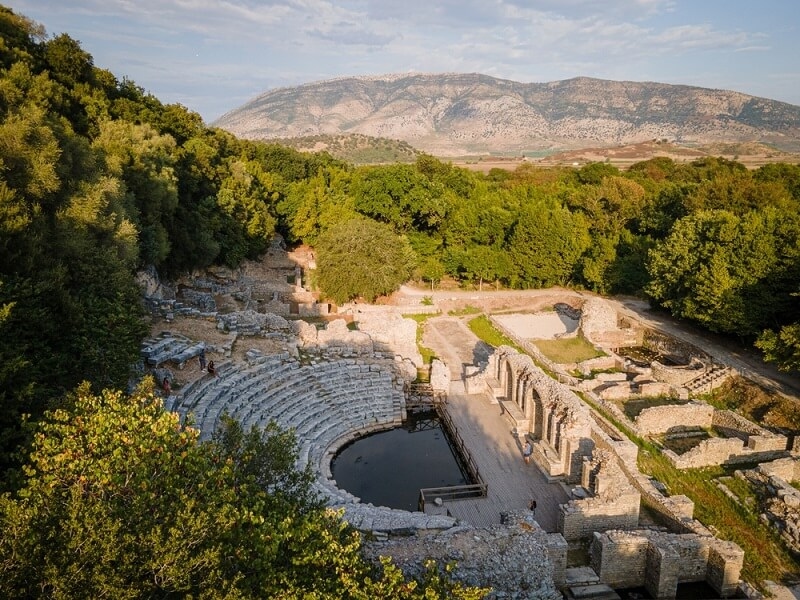
There are places that feel like quiet footnotes in history, and then there are places that speak up. Butrint does the latter. Tucked near Albania’s southern coast, this ancient city is layered with centuries of human effort, belief, conflict, and calm. The ruins don’t sit behind glass or velvet ropes. They breathe. You walk past them, hear birds in the reeds, feel the stone under your fingers, and suddenly history doesn’t feel distant at all. This guide walks you through what makes Butrint National Park so special, how it fits into the larger story of Albania ruins, and why it still matters, especially if you’re visiting from the US and craving something deeper than postcard travel.
This section sets the stage. Before naming dates or dynasties, it helps to understand that Butrint National Park is less a single ruin and more a long conversation across centuries.
Butrint began as an ancient Greek settlement, but it never stayed still. Romans reshaped it. The Byzantines fortified it. Venetians added their own defensive flair. Each group built on what came before, not erasing it, just adapting. That’s why walking through the Butrint ruins feels a bit like flipping through channels without a remote. One moment you’re in a Greek theater, the next you’re staring at Roman bath floors, and then a medieval tower pops into view.
It’s easy, especially from a US perspective, to think of Albania as off the main route of European history. But here’s the thing. This land sat between empires. Trade routes crossed nearby waters. Armies passed through. Ideas lingered. Albania's historical sites like Butrint remind us that history doesn’t only happen in capitals and capitals don’t always last.
Top pick: Explore Offbeat Places in Japan & Hidden Spots Like a Local
Ruins aren’t just about big events. This part shifts the focus to ordinary people who lived, worked, and argued within these walls.
The ancient theater is small by Roman standards, but that’s part of its charm. It once held a few hundred people, close enough to see expressions, hear laughter, maybe even feel awkward silence. Standing there now, you can almost sense the social energy. Performances here weren’t background noise.
Roman baths at Butrint show how social life worked. Bathing wasn’t just about hygiene. It was about meeting people, sharing news, and making deals. Nearby residential remains hint at domestic life. Narrow streets. Modest homes. Nothing flashy. Honestly, it feels familiar in a strange way, like any small town where everyone knows everyone else.
This section widens the lens. Butrint is not just stone. Nature plays a starring role.
Butrint National Park sits within a wetland ecosystem, full of lagoons and marshes. This landscape once acted as a natural shield, making the city harder to attack. Today, it adds mood. Mist rises in the morning. Frogs croak. Birds glide overhead. The setting softens the edges of the Butrint ruins, reminding visitors that cities don’t exist apart from nature.
Visit in spring, and everything feels fresh, almost hopeful. Summer brings heat and thick greenery. Fall quiets things down. Winter strips the place to its bones. Each season rewrites the emotional tone of the ruins. You know what? That’s part of the magic. The site never feels frozen in time.
Also check: Santorini Travel Guide for First Timers–Plan Your Trip Right
This part connects the past to present responsibility and global awareness.
Butrint earned its place as a UNESCO World Heritage site in Albania because it represents continuity. Few places show such a clear timeline from ancient Greek roots to medieval rule. UNESCO status helps protect the site, but it also signals to the world that Albania's ruins deserve attention, care, and respect.
Here’s a mild contradiction. Ruins feel permanent, yet they’re fragile. Stone erodes. Vegetation creeps in. Without active care, Butrint would slowly disappear. Preservation isn’t automatic. It’s a choice made by people who believe these stories still matter. Walking through the site, you can feel that effort, subtle but constant.
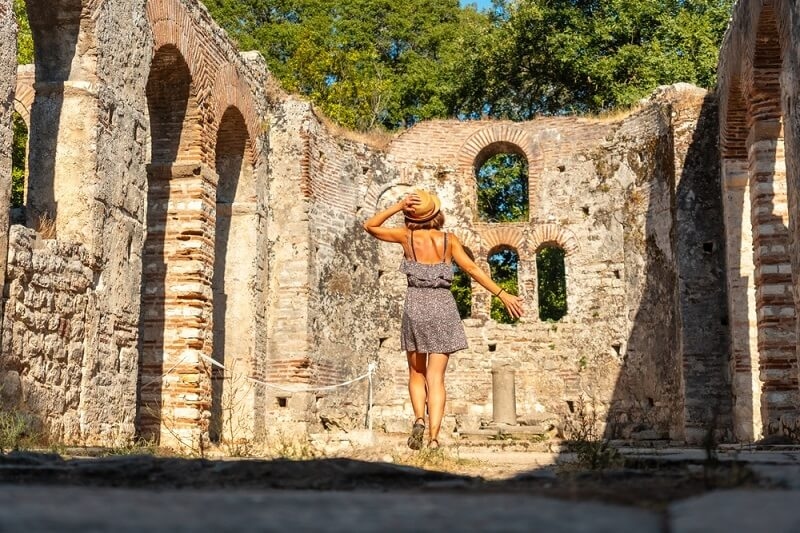
This section grounds the experience in practical reality without turning it into a checklist.
American travelers often try to see everything fast. But Butrint resists speed. Paths wind. Signs are modest. You’re meant to wander, pause, maybe sit on a stone and think for a minute. Let me explain. The value here isn’t in ticking boxes. It’s in noticing details. A carved block reused in a wall. A sudden view of water through trees.
Don’t expect cafes inside the ruins or dramatic reenactments. Expect quiet. Expect uneven ground. Expect moments where nothing happens except your own thoughts catching up. That’s not a flaw. That’s the point. Among Albania's historical sites, Butrint stands out precisely because it doesn’t shout.
Explore More: Make Bali Your Next Getaway with These Secret Adventures
This final section ties emotion, history, and relevance together.
Butrint ruins show cycles. Growth. Decline. Adaptation. Survival. Cities rise, shift, and sometimes fade. Standing there, it’s hard not to think about our own cities back home. How permanent do they really feel? Ancient ruins in Albania quietly ask these questions without demanding answers.
Long after you leave, images linger. The theater steps. The reflections in the lagoon. The sense that history isn’t linear, just layered. Butrint National Park doesn’t try to impress you. It trusts you to feel it. And honestly, that trust makes all the difference.
The ancient ruins of Butrint National Park are not a single story carved in stone. There are many stories, overlapping and unfinished. From Greek settlers to Roman citizens, from Byzantine defenders to modern preservationists, each group left something behind. For visitors, especially those traveling from the US, Butrint offers a rare chance to slow down and listen. Among Albania's ruins and historical sites, this place feels alive, thoughtful, and quietly powerful. It doesn’t rush you. It waits.
Yes, it’s one of the most accessible and rewarding Albanian historical sites. Clear paths and signage make it approachable without feeling overdeveloped.
Most visitors spend two to three hours. That allows enough time to walk slowly, read signs, and absorb the atmosphere without rushing.
Its value lies in showing multiple civilizations layered in one place. Few sites preserve such a continuous timeline so clearly.
Absolutely. Open spaces, wildlife, and visible structures keep kids engaged, especially if you frame it as a story rather than a lesson.
This content was created by AI